
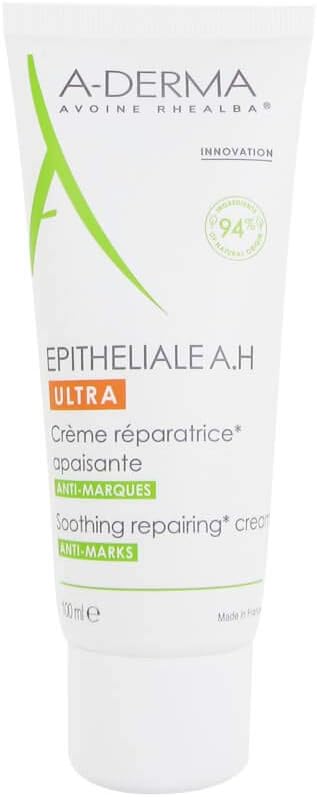
A-DERMA Epitheliale A.H Ultra Soothing Repairing Cream 100ml
FREE Shipping
A-DERMA Epitheliale A.H Ultra Soothing Repairing Cream 100ml
- Brand: Unbranded

Description
Pityrosporum Folliculitis/Malassezia folliculitis or simply known as Fungal Acne is a persistent acne-like condition that commonly responds poorly to traditional acne-treating methods. Unlike most cases of Acne where bacteria is the culprit, Fungi is the culprit of Fungal Acne (Hence the name!). There are certain classes & groups of ingredients that have been shown to promote and feed the growth of the Fungal Acne, Fungi such as fatty acids, oils, esters, polysorbates and fermented ingredients. If you find your skin doesn't like these simple alcohols, then free feel to avoid them by looking out for the Alcohol-Free icon.
Sản phẩm dùng cho da yếu sau can thiệp thẩm mỹ trên da (như lột da, chiếu laser,...) hoặc các tình trạng da liễu có thể để lại thâm, sẹo trên da. Water/Aqua, Caprylic/Capric Triglyceride, Glycerin, Butyrospermum Parkii (Shea) Butter (Butyrospermum Parkii Butter), Dimethicone, Cetearyl Alcohol, Glyceryl Stearate, Palmitic Acid, Stearic Acid, Sodium Hyaluronate, Avena Sativa (OAT) Leaf/Stem Extract (Avena Sativa Leaf/Stem Extract)*, Alanyl Glutamine Uncaria Tomentosa Extract, Batyl Alcohol, Benzoïc Acid, Caprylyl Glycol, Cetearyl Glucoside, Dimethiconol Polyacrylate-13, Polyisobutene, Polysorbate 20, Propylene Glycol, Sodium Hydroxide, Sorbitan Isostearate, Tocopheryl Acetate, Xanthan Gum. A helper ingredient that functions as a film-forming polymer (big molecule from repeated subunits). Alcohol ingredients are widely used in cosmetics and come in different types. For the most part alcohols are not problematic at all. It’s a handy multi-tasking ingredient that gives the skin a nice, soft feel. At the same time, it also boosts the effectiveness of other preservatives, such as the nowadays super commonly used phenoxyethanol.An Ecocert-approved, natural preservative that counts as gentle and non-irritating to the skin. Usually, it comes to the formula as part of a preservative blend as it's not enough on its own. what‑it‑does
A real oldie but a goodie. Great natural moisturizer and skin-identical ingredient that plays an important role in skin hydration and general skin health.Water, Caprylic/Capric Triglyceride, Glycerin, Butyrospermum Parkii (Shea) Butter (Butyrospermum Parkii Butter), Dimethicone, Cetearyl Alcohol, Glyceryl Stearate, Palmitic Acid, Sodium Hyaluronate, Avena Sativa (OAT) Leaf/Stem Extract (Avena Sativa Leaf/Stem Extract)*, Alanyl Glutamine Uncaria Tomentosa Extract, Batyl Alcohol, Benzoïc Acid, Caprylyl Glycol, Cetearyl Glucoside, Dimethiconol Polyacrylate-13, Polyisobutene, Polysorbate 20, Propylene Glycol, Sodium Hydroxide, Sorbitan Isostearate, Tocopheryl Acetate, Xanthan Gum.
- Fruugo ID: 258392218-563234582
- EAN: 764486781913
-
Sold by: Fruugo